Dichotomy, Duality, & Non-Duality
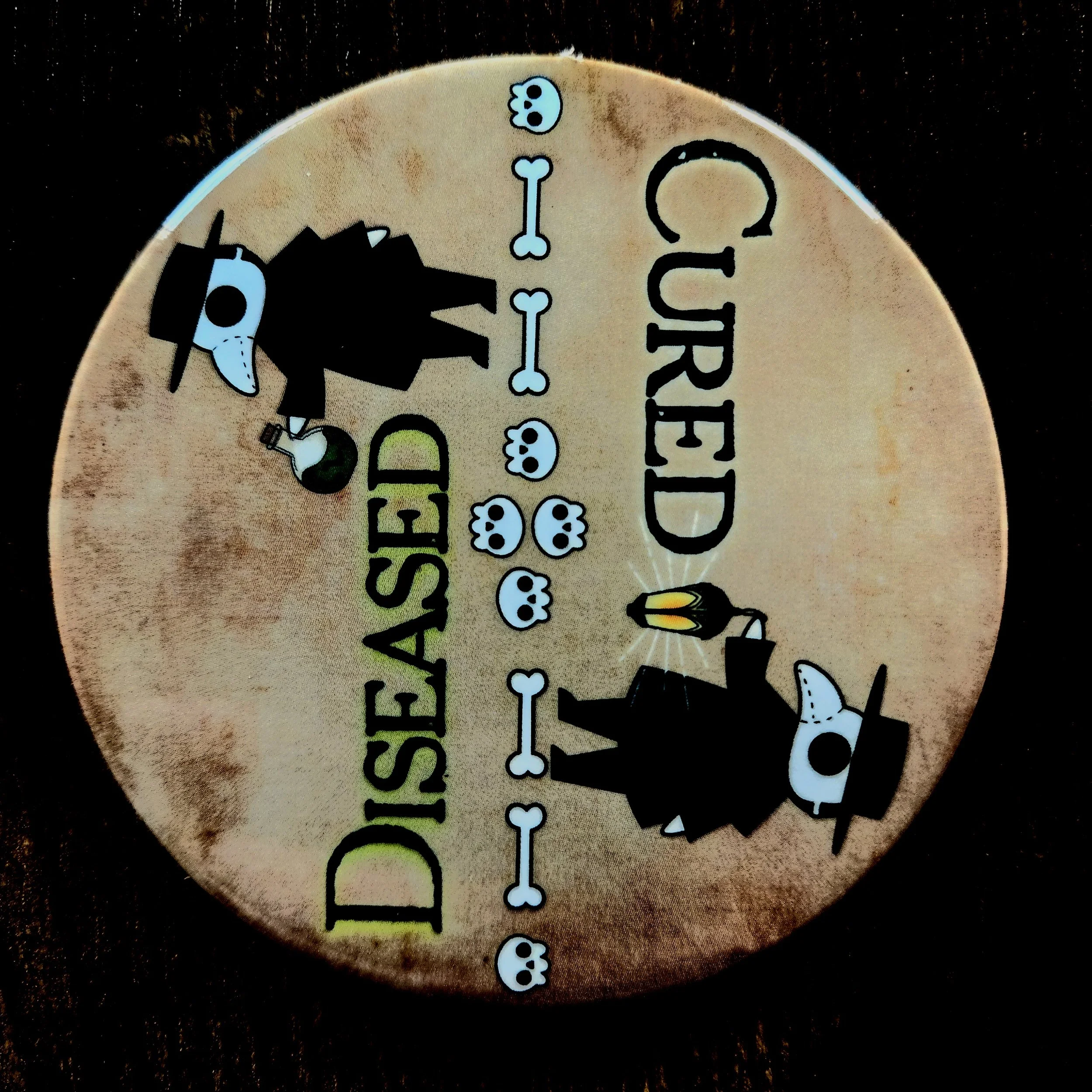
Hard dualistic thought is the default of Western society. Dichotomies of good vs evil. Chaos vs order. Inner circle vs outer. Us vs them... For western society, this line of thinking is rooted in capitalistic colonialism & Abrahamic religions. And, surface-level duality (dichotomy) has become so ingrained into our society that even those whom oppose the aforementioned labels have to expend vast amounts of efforts to unlearn dichotomic influences.
As a theory, polar opposite concepts (good & evil) create space for supposed balance. Often, growing up, I’d hear things along the lines of “There are good people and there are bad people. Good things will happen to good people. And bad, to the bad.”
These thoughts construct a comfort zone through which most people can justify life’s experiences. I do good things, therefore I must be a good person & will only experience good things. And, then, when we inevitably make a mistake, it forces a dissonance within the self that can lead to acute existentialism or suppression via denial. Furthermore, this tendency bypasses objective lived experiences for an illusion of safety. It feels safe to believe that good will happen to you given patience, passivity, and alignment to obligatory moralities.
Bad things happen to good people, too. It doesn’t make the bad thing a ‘test’ of character. Challenges are just a part of life. Passively believing good will just present itself as an opportunity of happenstance strips away agency and responsibility which disempowers an individual. Believing people who do bad things will eventually get what they deserve, systemically creates a cycle of responsibility shifting and further disempowers the victims of those people.
When dichotomy becomes dualism, we begin to recognize that opposing concepts are not so distinct and separate. Good and bad are subjective. Good people can do bad things, experience bad things, & exist within bad things. Good and bad are intertwined, overlapping, and can be subjectively interchangeable depending on perspective. (Murder is bad, but self defense is understandable.) This constructs a worldview accounting for empathy and reasonability.
Dualism creates a membrane-like comfort zone. I engage in activities I believe to be good because I strive to be a good person. When I make mistakes, they become opportunities to take responsibility and ownership of my actions which only adds to the bias that I’m a good person. This interwoven dualistic dynamic insists on a larger-scaled cosmic balance while still offering space for agency. However, the bias of being good via actively seeking to BE good, still stems from the internal differential distinction of good vs bad. When mistakes become overbearing, too many at once or one major mistake, dissonance within the self takes form. Even though dualism offers empathy, if our internal ratio of good deeds vs bad deeds begins to tip in direct opposition to beliefs we hold about ourself, we suffer the same options of acute existentialism and denial, with an additive of evasive rationalization.
When our foundational core beliefs about ourselves are challenged, it can be very jarring. Whether that belief is being a good person or not, or beliefs of other dualistic concepts. It’s hard to maintain a sense of balance given conflict, when there’s little to no room for flexibility.
There’s an idea within Hermeticism, the Principle of Polarity, that offers a different perspective that dual concepts are not just connected or overlapping, but instead are the same concept to differing degrees. This interjects a non-dualistic approach to supposed duality. Good and bad are therefore not opposites but degrees of Morality subjective to each individual and on a cosmic level, a large spectrum of moral possibilities. This would imply that duality is found within non-duality: an overarching non-dual concept broken down into two sides of the same coin for human interaction.
Non-duality removes the luxuries that come of responsibility shifting, adhering to pre-determined moral compasses, and passive assumed deservedness. It’s a framework to gaze upon existence from a stasis of ownership and presence. Whether or not you believe in an absolute good (100% good) or absolute bad (0% good) doesn’t matter. Non-duality would dictate that human life, every single possible experience, would fall in between the absolutes, never reaching those extremes. This could then be internalized that humans are neither good nor bad, we are all simply operating upon own own moral preferences. We are, then, empowered to act in alignment with our own unique merits. No longer are actions classified as good/bad, worthy/unworthy. Every decision we make is just that—a decision. We act because we want to act. We ignore because we want to ignore.
Experience is the point of life. Liminality births potentiality. It’s the in-between where life can be lived, in fluctuation with pure potential, order and chaos.
On the contrary, non-dualistic thought can lead to dissolution of the self via detachment of identity. If all is actually one, there is no self, just Collective. This extremity of non-duality bypasses the necessity of connection and engagement. Even though the theoretical perspective would be on Oneness, Collective, etc., this actually leads to a very isolating self-center-ment.
Experience is the point of life but neglecting subjective reality for a fixation on an extreme idea of non-duality (you are I are the same, Universe and I are the same) distorts the purpose of being a subjective human. Subjective and Objective are two poles of Truth. We as subjective ones cannot be 100% Objective Oneness, we can’t even come close to that absolution. And, luckily, we don’t need to.
The emphasis of non-duality should be fluctuation, constantly challenging biases and beliefs, aligning to an embodied sense of Truth & contending that Truth. Duality IS apart of non-duality but un-disputed stagnation within any personal philosophy negates connection & agency.
There are definitely other non-dual philosophies, religions, opinions aside from the briefly mentioned Hermeticism. And, looking at older traditions… cultures and religions based on animistic principles often don’t even partake in a duality vs non-duality conversation. They instead focus on internal & external connection and a state of being in relationship to that which surrounds them. I mention this here to spark inspiration to explore alternative perspectives. You are under no obligation to uphold a philosophy pushed upon you that actively goes against what your own Truth is saying.
But, we should hold ourselves to the standard of exploring our Truth. Even if that Truth is to eat chips on the couch for 8hrs.
-Alyssa;
Definitely eating chips on the couch as a self-care day…
Sources
The Kybalion: A Study of The Hermetic Philosophy of Ancient Egypt and Greece - by Three Initiates, 1908. This version, published by Rough Draft Printing; 2012
